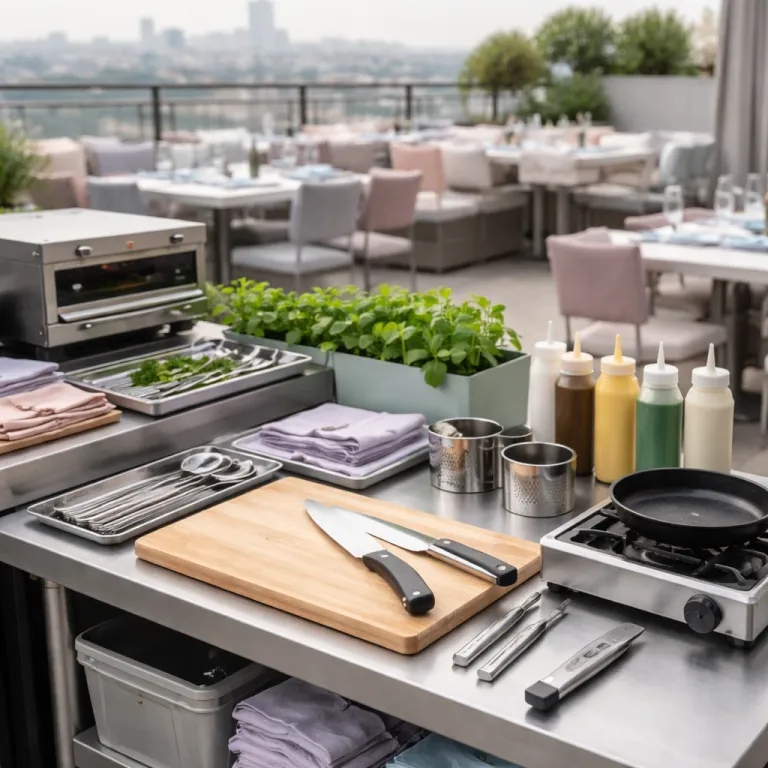
The rise of the chef rooftop restaurant in the luxury hotel world
A decade ago, a chef-led rooftop restaurant in a luxury hotel was often a “view tax” with a passable menu. Today the best rooftop kitchens would thrive at street level, because the restaurant teams are led by serious talent and supported by state-of-the-art equipment. This shift has turned the typical rooftop into a stage where the dining experience, not just the skyline view, earns its premium.
Across major cities, elevated restaurant openings are now anchored by a named chef, often a celebrity with a clear culinary identity. Properties collaborate with executive chef leaders such as José Andrés at The Bazaar by José Andrés in Washington, D.C., or Daniel Boulud at Terrace on 7 in New York, proving that a chef-driven rooftop in a luxury hotel can carry the same weight as a flagship at ground level. These openings are not afterthought bars; they are fully fledged dining rooms with tasting menus, brunch options and cocktail lounge programmes that rival any address in town.
Hotel groups have learned that a rooftop bar alone no longer satisfies couples who travel for food. They invest in open kitchens, temperature-controlled meat ageing rooms and pastry labs, then hand the keys to an executive chef who treats the rooftop as a signature restaurant rather than a lobby annex. Industry case studies from luxury properties in the United States and Europe describe double-digit percentage revenue lifts once a serious rooftop dining room is in play, because locals book tables as eagerly as in-house guests and treat the venue as a destination restaurant.
How chef signature rooftops outgrow generic hotel programming
The difference between a chef-led rooftop restaurant in a luxury hotel and a generic rooftop bar is immediately clear when you sit down and read the menu. At Waldorf Astoria London Admiralty Arch, for example, the planned sixth-floor terrace is designed to host concepts by Clare Smyth and Daniel Boulud, treating the rooftop as a gastronomic room in the sky, not a holding pen for sunset cocktails. The ambition is to plate food with the same precision you would expect from a Michelin-starred dining room, even though the skyline competes for your attention.
Chef-driven rooftops are increasingly shaped by collaborations with renowned names such as Marcus Samuelsson, José Andrés or regional stars like Michael Mina in San Francisco and David Burke in New Jersey. When a chef like Marcus Samuelsson signs the rooftop, the restaurant openings come with a clear promise of flavour, whether that means spice-forward meat dishes or seafood that feels anchored to the city below. A luxury hotel rooftop restaurant that carries the name of José Andrés, for instance, can lean into concepts like Bazaar or Bazaar Meat while still tailoring the dining experience to the nation’s capital or a coastal resort.
By contrast, hotel group–programmed rooftops often recycle the same international menu and safe bar snacks, relying on the view to justify the bill. Couples who care about gastronomy quickly learn to read the signals: a starred chef on the masthead, a focused brunch menu on Saturday and Sunday, and a cocktail lounge list that references local producers all suggest an elevated dining room where the kitchen, not the skyline, is in charge. For couples comparing different properties, paying attention to these cues helps distinguish a truly chef-led rooftop from a generic bar with a nice panorama.
Three rooftop menus worth riding the elevator for
Some rooftops are worth booking purely for the menu, even before you see the view. Nobu Hotel Madrid, with its multi-level Nobu restaurant and bar culminating in a rooftop terrace, is a textbook example of a chef-led rooftop restaurant in a luxury hotel where the food could stand alone at pavement level. The menu moves confidently from precise sashimi to charcoal-grilled meat, while the skyline simply frames the experience rather than compensating for it.
In the United States, the rooftop at Conrad New York Downtown, overseen by executive chef Christopher Skarstrom, shows how an elevated venue can feel both sly and serious. The restaurant balances Mediterranean-leaning food with a cocktail lounge atmosphere, so couples can move from a seafood-focused dining experience to a quieter bar seat without ever losing the city lights. Another strong case is The Morrow Hotel near the National Mall in the nation’s capital, where recent restaurant openings have leaned into chef-led concepts that treat the rooftop as a destination for locals celebrating Mother’s Day or a Saturday–Sunday brunch menu, not just hotel guests passing through.
Each of these properties proves that a luxury hotel rooftop restaurant can justify its prices through technique and sourcing rather than altitude. You will see this in the way meat is handled, the way sauces are reduced, and the way desserts arrive as composed courses rather than afterthoughts. For couples planning a trip that revolves around skyline dining, these rooftops are not just convenient; they are the reason to choose the hotel in the first place, much like selecting a refined riverfront Thai restaurant for your next city break when you prioritise elevated views and thoughtful cooking.
When the cocktail list becomes the real menu
On the best rooftops, the bar is not a sideshow to the restaurant but a parallel stage. A chef-led rooftop restaurant in a luxury hotel now often launches with a cocktail lounge programme that mirrors the kitchen’s philosophy, using infusions, clarified juices and low-waste techniques to echo the food. In some cases, the rooftop bar becomes the sly favourite of locals who slip in for a drink and a small plate rather than a full tasting menu.
Momentum KC, a members-only rooftop bar, illustrates how intimacy and sophistication can turn a skyline view into a private club atmosphere. Here the cocktail lounge is curated with the same care an executive chef gives to a tasting menu, and the bar snacks are treated as miniature expressions of the main restaurant’s food. Across many luxury hotels, beverage teams work hand in hand with starred chef leaders, so a Michelin-starred kitchen downstairs might collaborate on a rooftop Negroni that uses the same vermouth reduction as a signature meat glaze.
For couples, this alignment between bar and restaurant opens up flexible ways to structure the night. You might book a late table at the rooftop dining room, then arrive early to learn the bar team’s off-menu favourites while watching the city shift from blue hour to darkness. Or you could treat the rooftop bar itself as the main event, grazing through a series of small plates that echo the dining experience downstairs without committing to a full room-service-style meal.
Booking strategy for couples: turning the rooftop into the main event
Securing the right table at a chef-led rooftop restaurant in a luxury hotel requires the same planning you would give to a major theatre night. Make reservations in advance, especially for restaurant openings tied to a celebrity chef such as Marcus Samuelsson, José Andrés or a newly minted starred chef, because locals will compete with in-house guests for the best seats. Arrive early for the first sitting if you want softer light and a clearer view, or choose a later slot if the cocktail lounge energy matters more than skyline photography.
Think of the rooftop as the centrepiece of your stay rather than a last-minute add-on. Many couples now book a specific room category purely to be closer to a signature rooftop restaurant, treating the elevator ride as part of the ritual and planning Mother’s Day lunches or Saturday–Sunday brunch menu celebrations around that dining experience. When you evaluate options, look beyond the generic term restaurant and read for signals such as named executive chef leadership, references to José Andrés concepts like Bazaar Meat, or mentions of a clearly identified chef guiding the kitchen.
Practical details still matter, even at altitude. Check dress codes, ask whether the rooftop bar accepts walk-ins at the counter, and inquire about weather contingencies so your carefully planned evening does not move abruptly into an indoor room with no view. As one hotel FAQ puts it plainly, “They offer unique dining experiences with panoramic views, attracting guests and enhancing the hotel's appeal.” Treat that appeal as the main event of your trip, and the skyline will feel like a private backdrop rather than a shared attraction.
FAQ
What are the benefits of choosing a chef led rooftop restaurant in a luxury hotel ?
A chef-led rooftop restaurant in a luxury hotel combines high-level cuisine with a dramatic view, so you are not paying a premium just for altitude. Collaborations with executive chef leaders and celebrity figures mean the food often matches or exceeds the quality of flagship street-level venues. This creates a dining experience where the skyline becomes a frame for serious cooking rather than a distraction from average plates.
How do rooftop restaurants impact hotel revenue and guest satisfaction ?
When a luxury hotel opens a serious rooftop restaurant, it usually attracts both in-house guests and local diners, which broadens revenue streams. Industry reporting from hotel groups and market analysts describes noticeable revenue increases after launching a chef-driven rooftop, because the venue becomes a destination in its own right. Elevated guest satisfaction follows, as travellers feel they have access to a signature restaurant without leaving the building.
Are reservations necessary for rooftop dining in luxury hotels ?
Reservations are strongly recommended for any chef-led rooftop restaurant in a luxury hotel, especially those tied to names like Marcus Samuelsson or José Andrés. Rooftop seating is finite, and prime view tables at sunset or during Saturday–Sunday brunch services are often booked weeks ahead. If you prefer spontaneity, ask whether the rooftop bar keeps a portion of seats for walk-ins at the counter.
Do rooftop restaurants in luxury hotels operate all year round ?
Many rooftop restaurants in luxury hotels operate seasonally, especially in climates with harsh winters or heavy rain. Some properties invest in retractable roofs, wind screens and heating so the restaurant and bar can function almost year round, even if the outer terrace closes. When you book, ask how weather affects the view and whether your table might move to an indoor room if conditions change.
What cuisines are most common in chef driven rooftop restaurants ?
Fusion cuisines that blend local ingredients with international techniques are particularly popular on rooftops, because they appeal to both travellers and residents. You will often see Japanese–Peruvian combinations, Mediterranean menus with Middle Eastern accents, or Latin-inspired tapas shaped by chefs like José Andrés. The key is that the menu feels specific to the place and the chef, not a generic list of international dishes relying solely on the view.