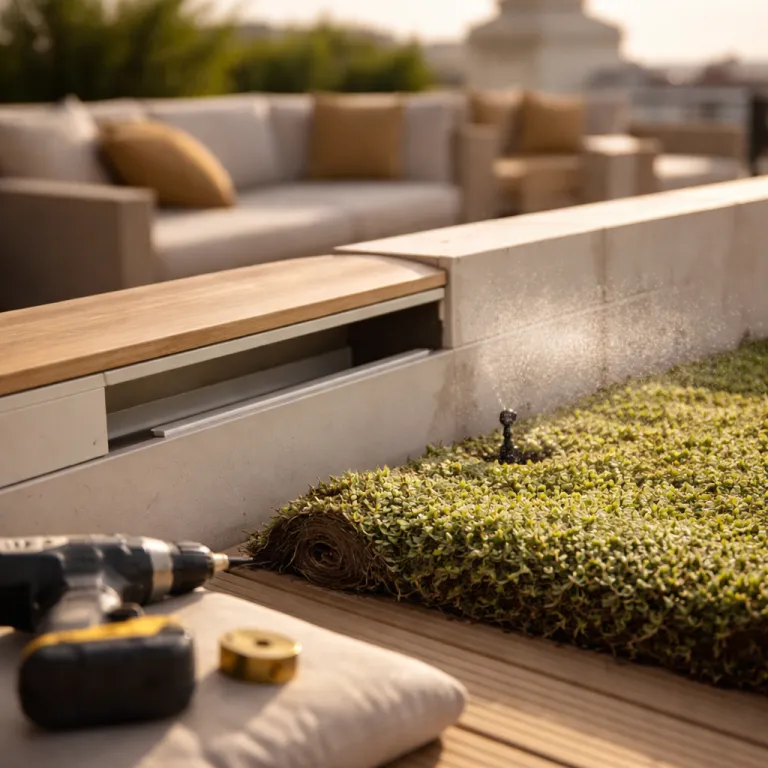
Invisible wellness on the roof: where luxury stops posing for photos
Invisible wellness rooftop hotel design rarely shows up in a skyline selfie. It lives in the way a hotel room ceiling glows softly at dusk, how the air feels unexpectedly clean on a rooftop even when the city below is busy. This is where luxury stops being a logo and starts acting as a nervous system reset for guests who arrive with children, strollers and jet lag.
Think about the difference between a spa on the roof and wellness built into the roof itself. A rooftop spa is a scheduled activity; invisible wellness is the circadian hotel lighting that shifts from cool to warm tones so young guests expect sleep rather than screen time, and parents feel their bodies finally align with the time zone. Many lighting designers now aim for cooler 4,000–5,000 K light in the morning and warmer 2,700–3,000 K in the evening, at gentle levels around 50–150 lux in rooms before bedtime, figures that broadly echo guidance from sleep and lighting research groups. When a hotel treats light, sound and air as core design materials, the rooftop becomes a retreat that works quietly all year, not just a summer photo backdrop.
Across the USA, properties like Hemlock Neversink in the Catskills (a wellness retreat in Neversink, New York) or the Equinox Hotel New York in Hudson Yards show how this shift plays out in practice. These hotels use rooftop pools, wellness programs and in-room fitness kits not as trophies, but as tools to create a whole stay that feels like a room retreat above the noise. A true invisible wellness rooftop hotel treats every transition space hotel-wide, from elevator lobby to open-air terrace, as part of one continuous calming experience.
For families, this matters more than another dramatic rooftop bar photo. Children read environments faster than adults; they sense whether guest rooms feel safe, quiet and breathable long before they notice the skyline. When the rooftop is designed as a calm valley communal zone in the sky, with shaded seating where parents can sit directly beside a pool while kids play, the entire hotel becomes a functional retreat rather than a fragile stage set.
Wellness tourism is no niche experiment anymore. According to the Global Wellness Institute’s 2023 Global Wellness Economy Monitor, more than half of travelers now seek some form of wellness support during trips, and that demand is reshaping how luxury hotels think about rooftops. The invisible wellness rooftop hotel is where this demand meets design intelligence, and where families finally get a form of luxury that works as hard as they do.
Circadian light, quiet air and the new definition of rooftop luxury
On a traditional rooftop, the story starts and ends with views and cocktails. The best invisible wellness rooftop hotel designs start with light, air and acoustics, then let the skyline play a supporting role. That shift is subtle, but it is exactly what separates a pleasant rooftop bar from a true urban retreat for families.
Circadian lighting is the clearest example of this new thinking. At elevation, where glass walls and open-air terraces flood guest rooms with daylight, poorly managed light can overstimulate children and keep parents awake long after the city quiets. When a hotel in New York or any major city tunes its lighting to support natural rhythms, the rooftop becomes a place where guests enjoy sunsets without sabotaging sleep, and where a lounge open late can still feel gentle on tired eyes. Studies from organizations such as the Illuminating Engineering Society and various sleep foundations broadly support this approach, noting that cooler light earlier in the day and warmer light in the evening can help reinforce circadian cues.
Acoustic engineering is the next invisible frontier. A quiet rooftop is now the real luxury tell, more than marble or rare spirits at the rooftop bar; it is the difference between hearing your child’s voice and shouting over a DJ. Many hospitality projects now target background sound levels around 40–50 dBA in family zones, using sound-absorbing finishes, smart speaker placement and wind baffling to keep noise under control. Properties that invest in these strategies create open-air lounges where families can sit directly together, talk in normal tones and feel the city energy without the city assault. In these spaces hotel teams can host yoga at dawn, story time at dusk and still keep the atmosphere refined for adults later in the evening.
Air quality completes the triad. In dense New York City districts or desert locations like Omni Tempe Hotel at ASU in Arizona, filtration, plant selection and material choice quietly determine whether guests expect to wake clear-headed or congested. Many wellness-focused rooftops now pair MERV 13 or higher filters with increased air changes per hour and low-emission finishes to reduce particulates and VOCs, an approach consistent with recommendations from building health and indoor air quality standards. The most forward-looking luxury hotels use biophilic design, careful rooftop planting and measured ventilation rates not just for looks, but to keep the air on the rooftop measurably cleaner than the streets below, turning every family breakfast outside into a small wellness intervention.
For parents choosing between properties, these details are rarely listed in marketing copy. Yet they matter more than square footage, because they shape how a child sleeps, how a partner rests and how long everyone can comfortably stay in shared spaces. If you are weighing different rooftop pools that work for families, focus less on the infinity edge and more on how the invisible systems of light, sound and air will support your family across the entire year.
The family friendly rooftop nobody advertises: how to read the signals
Family travelers are used to being told where they do not belong on a rooftop. The quiet revolution of the invisible wellness rooftop hotel is that the most family friendly terraces are often the ones that never use the word family at all. Instead, they signal their intent through layout, materials and the way service flows between guest rooms, pool decks and lounges.
Look first at how the rooftop connects back to the rest of the hotel. When guest rooms have intuitive access rooftop routes, with lifts that open directly onto calm foyers rather than crowded bars, parents can move between naps, swims and meals without friction. A well planned spaces hotel sequence lets a child move from a room retreat to a shaded cabana in under two minutes, which is exactly the window you have before a tantrum on a hot day.
Next, study the furniture and zoning. A rooftop that treats families seriously will carve out a valley communal zone where low seating, planters and partial screens create micro pockets of privacy, even when the lounge open area is busy. In these corners, a bar serves fresh juices made with local ingredients by day and wood fired snacks by night, while adults can sit directly beside children without feeling exiled from the main scene. Image alt text for these spaces might read: “family rooftop wellness terrace with shaded seating, circadian hotel lighting and city views.”
Sound again is a powerful clue. If you can hear the city but still follow a child’s story, the acoustic engineering is doing its job, and that is a hallmark of a thoughtful invisible wellness rooftop hotel. Properties like The Envoy Hotel in Boston or the rooftop lounge highlighted in Tennessee’s quiet new skyline player (a regional luxury property noted in hospitality press) show how a rooftop bar can host adults at one end while keeping another wing tuned to softer volumes and slower rhythms for mixed age groups.
Finally, pay attention to how the hotel treats transitions across the day. From early morning to late evening, the best luxury hotels shift their rooftops from sunrise yoga to late night cocktails without ever making families feel like an afterthought. If you want a deeper sense of how this plays out in practice, look at an elegant stay review where the rooftop is woven into the entire narrative of rest, not just nightlife.
From spectacle to narrative: how invisible wellness rooftops change the stay
Rooftops used to be about spectacle; now they are about story. The invisible wellness rooftop hotel reframes the stay as a narrative that moves from arrival to sleep, not just from check in to the first skyline selfie. For families, that narrative is the difference between surviving a city break and returning home genuinely restored.
Guest experience is shifting from square footage to connection, and rooftops are where this shift becomes visible. When a casa style suite opens onto a small terrace where parents can sit directly outside after bedtime, the room retreat extends into the sky and the city becomes a backdrop rather than a pressure. In these properties, every design decision, from the height of the glass balustrade to the placement of planters, is about giving guests enjoy moments of calm without ever leaving the view.
Wellness hotels like 1 Hotel San Francisco, Omni Louisville Hotel in Kentucky or Hemlock Neversink in New York State show how rooftop pools, spas and lounges can be woven into a single, coherent experience. They offer rooftop pools for play, wellness centers for focused recovery and in-room fitness kits for parents who cannot leave sleeping children, proving that a luxury hotel can be both aspirational and deeply practical. As one expert summary puts it, “What is a wellness hotel? A hotel offering health-focused amenities like spas and fitness centers,” a definition echoed by industry groups and wellness tourism analysts.
For booking platforms focused on luxury hotels with serious rooftop credentials, the opportunity is clear. Highlight which properties offer access rooftop spaces with circadian lighting, quiet zones and air quality strategies, rather than just listing bars and views, because these are the signals that matter to premium families. When a hotel in New York or any major city can show that its rooftop bar, pool and lounge open areas are designed as one continuous wellness ecosystem, guests expect a stay that feels curated rather than improvised.
This is also why invisible wellness is the most under marketed luxury signal in hospitality. Families do not need more spectacle; they need rooftops that quietly align light, sound, air and service into a single, breathable story throughout the year. The next time you scroll through hotels in any city, look past the fireworks and ask one question instead; will this rooftop help my family’s bodies arrive as quickly as our luggage.
Key figures shaping invisible wellness rooftop hotels
- The Global Wellness Institute’s 2023 Global Wellness Economy Monitor notes that more than half of travelers now seek wellness options, showing that a majority of global guests actively look for health focused elements such as rooftop pools, spas and clean air systems when choosing a hotel. This aligns with broader wellness tourism research that tracks how families increasingly prioritize restorative environments over purely visual spectacle.
- Wellness tourism grew at an average annual rate of around 6–7 % between 2017 and 2022 according to the Global Wellness Institute, a pace that encourages luxury hotels to invest in invisible wellness features like circadian lighting and acoustic engineering on rooftops rather than only visible amenities. Industry analysts expect this segment to keep outpacing general travel growth as more guests seek sleep support, stress reduction and healthier air while on the road.
- Rooftop wellness amenities such as pools, lounges and open air fitness spaces are now offered year round in many urban properties, reflecting a shift from seasonal spectacle to continuous functionality that better serves premium family travelers. For operators, this means treating the rooftop as a 24/7 wellness platform where design, programming and operations work together to support family rooftop wellness in every season.