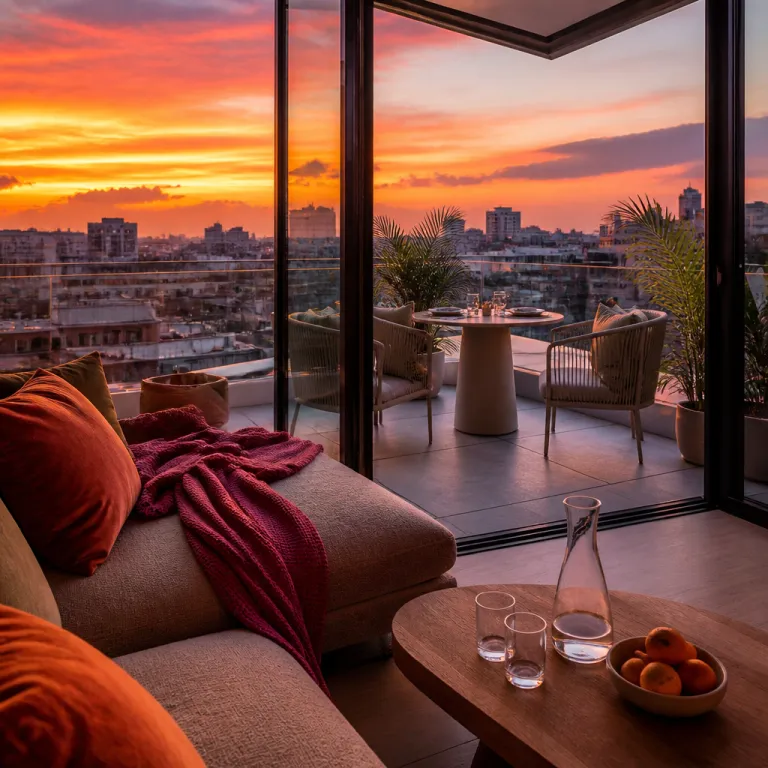
Rooftop suite premium pricing in a luxury hotel world
In New York, the idea of paying extra for a rooftop suite in a luxury hotel is no longer abstract theory but a line item that reshapes how executives extend business trips. When a hotel in New York City or Manhattan adds guaranteed access to the top floor, the room stops being just a place to sleep and becomes a private gallery for skyline views that can justify a measurable rate jump. Across high-end properties, industry commentary and revenue manager interviews suggest that suites with direct rooftop or terrace access often command a premium in the region of 15 to 25 percent over comparable rooms, and that uplift is clearest in dense city districts where every metre of air above the park or river carries value.
Guests who book these rooms are not simply paying for square metres; they are paying for time with the city skyline when meetings end and the laptop closes. Hotel management understands that a corner suite with a balcony facing the Manhattan skyline or the East River can hold a client drink, a quiet debrief, or even a small private event that would otherwise require a separate venue. That is why rooftop access increasingly appears as a structured category on booking platforms, from direct channels to large online travel agencies, rather than as an informal upgrade whispered at check-in.
The key question is whether the premium transforms the stay or merely decorates the invoice. To answer that, you need to learn how the rooftop is configured, how the rooms connect to it, and how the hotel handles flow between public bar spaces and semi-private terraces. Only then can you decide if a specific suite, from a deluxe room with partial city views to a full glass-enclosed rooftop residence, earns its place among the best hotels for value rather than just the most famous luxury addresses by name.
The four rooftop access configurations that shape value
Across the most serious luxury hotels, rooftop access now falls into four repeatable patterns that directly influence whether the price premium for a rooftop-facing suite works in your favour. The first is the shared rooftop with priority access, where all guests can reach the rooftop bar or pool but certain rooms receive guaranteed seating, early golden-hour slots, or reserved zones facing the city skyline. The second is the dedicated terrace zone, where a cluster of rooms on a specific floor share a semi-private deck with better skyline views than the general rooftop crowd below.
The third configuration is the suite-attached private terrace, where one or two rooms on the top floor open directly onto a balcony or terrace that feels like an outdoor extension of the living room. Here, the premium depends on how clearly the hotel separates that terrace from any adjacent rooftop bar, service corridor, or event space that might send noise and foot traffic past your chairs. The fourth, and rarest, is the full rooftop suite, where the entire rooftop becomes a single residence with wraparound panoramic views of the city, often including landmarks such as the Brooklyn Bridge, Central Park, or the East River in New York City.
Properties such as Mandarin Oriental in major capitals illustrate how these models play out in practice, with some suites offering glass-enclosed winter gardens while others rely on open-air balconies that are more weather dependent. When you read marketing language about rooftop rooms, learn to decode whether you are getting a true private terrace or simply priority access to a shared rooftop bar that still feels like a public event space. For a deeper sense of how a carefully framed terrace can change a stay, consider how cathedral-facing rooftop suites in Milan or Duomo-view terraces in Florence are reviewed in detail by frequent guests, with the same close reading you should apply to any premium rooftop room choice.
When the premium is justified: Aman New York, Bvlgari Roma and beyond
Some addresses prove exactly when paying extra for a rooftop suite in a luxury hotel delivers more than marketing language. At Aman New York, for example, the corner suites with terraces feel like suspended townhouses above Midtown, with outdoor fireplaces and city views that frame both the park and the surrounding towers in a way no internal room can match. In Rome, Bvlgari Roma uses its rooftop suites to stage a different drama, where the skyline views sweep across domes and terracotta roofs rather than the Manhattan skyline, yet the logic is identical: the terrace becomes the primary living space whenever the weather cooperates.
In these hotels, the premium is not just about a higher floor or a slightly larger room but about the hours you actually spend outside, working, entertaining, or decompressing. A business-leisure traveller who spends mornings in meetings and afternoons on calls can use a rooftop terrace as a quiet office, then reset the same space as a bar-like setting for a private event with clients once the sun drops behind the city. That dual use is why many executives quietly consider these suites as alternative meeting rooms, especially when the hotel offers discreet service from the main rooftop bar or pool deck without turning the terrace into a public corridor.
Elsewhere, in properties from hotel Brooklyn-style conversions to grand city hotels in New York, the value is less clear when the so-called rooftop suite simply adds a narrow balcony facing a noisy bridge or highway. Before paying the premium, study floor plans, look for photos taken from neighbouring rooms, and check whether the terrace sits directly above a glass-enclosed event space that might host weddings late into the night. For example, guest photo galleries often reveal whether speakers are mounted directly under your balcony or whether the dance floor sits below your windows, and several revenue managers interviewed in trade publications note that guest complaints about noise are one of the main reasons they adjust rooftop suite pricing or restrict event hours.
The hidden fine print of private terraces and rooftop privacy
Marketing copy loves the phrase private terrace, yet in the context of premium rooftop suites in luxury hotels, that word private often hides a more complicated reality. In some hotels, the terrace attached to your suite doubles as a fire escape route, a staff service path, or an overflow zone for the rooftop bar during busy event nights. In others, the low separation between your balcony and the neighbouring rooms means that anyone leaning over the rail can see directly into your outdoor seating area, turning what should be a sanctuary into a stage.
To verify the privacy claim, start with the basics: request a floor plan that shows how your room, terrace, and the rooftop connect, and ask specifically whether any public or staff routes cross your outdoor space. Then, learn from previous guests by studying user photos that show the terrace from multiple angles, including shots taken from inside the room looking out and from the rooftop back toward the suites. If you see glass-enclosed railings with no visual screening between terraces, or if the hotel frequently hosts a private event on the same level, assume that noise and sightlines will be part of your stay and factor that into whether the premium feels justified.
Noise from a rooftop pool, a DJ-driven bar, or a wedding on the deck below can travel straight up to your floor, especially when the terrace sits above a hard-surfaced courtyard that reflects sound. Ask the hotel whether the rooftop bar closes earlier than the main lobby bar, and whether large events are capped on the nights of your stay, particularly if you plan to use the terrace as a quiet workspace. One industry summary puts the pricing logic in plain language that also hints at why you must interrogate the details before paying more: “Why do rooftop access suites cost more? Exclusive views and amenities justify higher rates.” and “Are rooftop suites worth the premium? For unique experiences and views, many find them valuable.”
Making the business leisure case: hours of use and rate justification
For the business leisure traveller, the smartest way to approach rooftop suite pricing decisions in a luxury hotel is to think in hours, not just in euros or dollars. Start by mapping your likely schedule across the booking, check-in, stay, and check-out timeline, then estimate how many waking hours you will actually spend in the room or on the terrace. If you will be in external meetings from early morning until late evening, paying a steep premium for skyline views you only see at night might not be the best luxury choice, even in the best hotels in Manhattan or New York City.
On the other hand, if you plan to work from the room for several hours each day, a corner suite with a king bed, a generous desk, and a balcony facing views of Manhattan or views of New York can replace the need for a co-working space or a series of café meetings. In that scenario, the terrace becomes both an office and a decompression zone, especially when the hotel offers in-room service from the rooftop bar or pool so you can host a discreet client drink without leaving your floor. This is where platforms that specialise in rooftop-focused stays, such as Rooftopstay, can help you learn which hotels treat the rooftop as a serious extension of the room, as seen in detailed guest write-ups of elegant Chicago stays with strong city views and thoughtful terrace design.
When comparing options across brands such as Aman, Rosewood, Mandarin Oriental, and Bvlgari, look beyond the headline rate and examine what the rooftop access actually delivers in terms of usable space and service. A deluxe room on a lower floor with strong city views and access to a calm rooftop lounge might offer better return on investment than a nominal rooftop suite perched above a noisy bar. In the end, the corner suite premium only makes sense when the rooftop genuinely changes how you live, work, and host in the hotel, turning the room from a backdrop into the main stage of your stay.
FAQ
Why do rooftop access suites usually cost more than standard rooms?
Rooftop access suites cost more because they combine scarce outdoor space with elevated city views that standard rooms cannot match. Hotels can justify higher rates when a suite offers panoramic views, better privacy, and access to amenities such as a rooftop bar or pool that feel exclusive. In dense urban markets like New York City or Manhattan, that combination of altitude, views, and flexibility for hosting small meetings or a private event significantly increases perceived value.
How can I check whether a rooftop terrace is truly private before booking?
Ask the hotel for a detailed floor plan that shows the relationship between your room, the terrace, and any public rooftop or event spaces. Then, review guest photos to see whether neighbouring balconies overlook your area, and whether staff or other guests use the same terrace as a passage. If the hotel cannot clearly explain how access is controlled, assume the terrace is semi-private at best and adjust your expectations before confirming the booking.
Are rooftop suites worth the premium for short business trips?
For very short trips with packed schedules, rooftop suites are only worth the premium if you will actually use the terrace for work, calls, or client drinks. If you expect to arrive late and leave early, a high-floor deluxe room with strong skyline views may offer better value. The premium makes more sense when you can spend several hours each day in the space, effectively replacing external meeting rooms or co-working fees.
What is the difference between priority rooftop access and a private rooftop suite?
Priority rooftop access usually means you share the rooftop with other guests but receive preferred seating, early access times, or reserved zones. A private rooftop suite means the terrace is directly attached to your room and not open to general hotel traffic, although you should always confirm how strictly that boundary is enforced. The pricing gap between these two models can be significant, so align your choice with how much privacy and control you actually need.
Which brands are leading the trend for meaningful rooftop suite experiences?
Brands such as Aman, Bvlgari, Rosewood, and Mandarin Oriental are at the forefront of integrating serious rooftop spaces into their top-tier suites. Properties like Aman New York and Bvlgari Roma show how terraces can become primary living areas rather than decorative add-ons. When evaluating any hotel, look for this level of integration between room design, rooftop access, and service if you want the premium to feel genuinely earned.