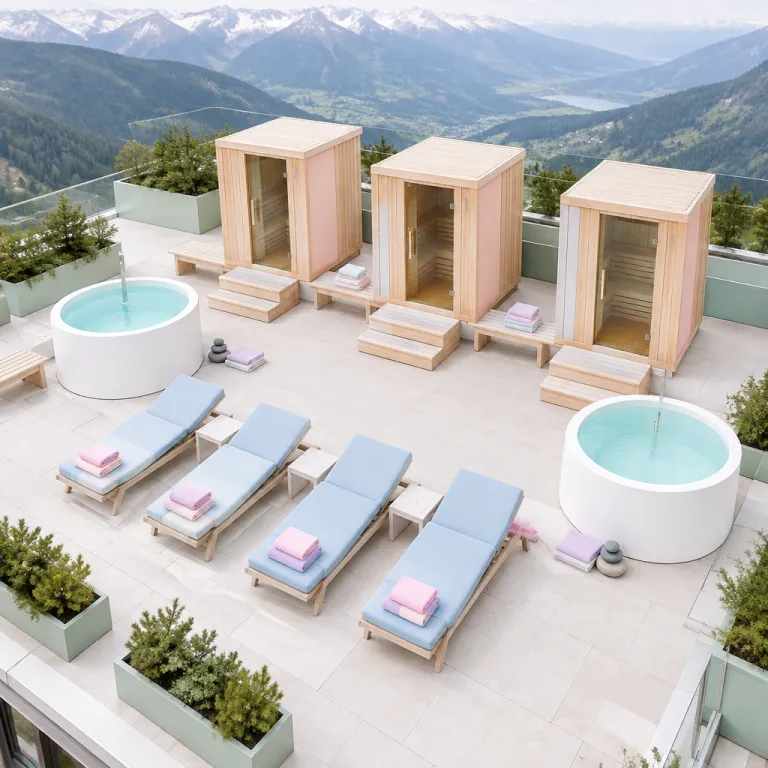
From Nordic ritual to rooftop performance: how recovery reached the skyline
Wellness on the roof has shifted from gentle stretching to serious recovery work. The new rooftop sauna ice bath luxury hotel scene treats altitude as a tool, turning every terrace into a performance focused spa rather than a passive view deck. For solo explorers, that means each hotel rooftop becomes a training ground for body, mind, and deep relaxation.
Nordic traditions of sauna, cold water immersion, and arctic bath rituals once belonged to remote lakeside retreats. Now those same hot cold contrasts appear above city skylines, where rooftop saunas and ice baths sit beside a heated pool and an outdoor hot tub. The result is a layered experience where guests move from sauna hot cabins to cold plunge pools while the city glows beneath them.
This migration from lakeshore to rooftop did not happen by accident. Younger high net worth travellers started asking hotels and hotels spas for performance oriented spa treatments instead of only pampering massages. As wellness travellers began spending significantly more per trip, luxury hotels realised that a rooftop sauna and ice bath programme could justify higher room rates and extended stays.
In many properties, the spa now climbs to the roof rather than hiding in a basement. A single rooftop sauna can anchor an entire wellness concept, with infrared sauna cabins, steam room zones, and outdoor ice baths arranged in a deliberate thermal circuit. When a hotel designs this circuit well, the guest experience feels more like a curated journey than a simple visit to a spa.
For travellers comparing hotels, the language has changed too. People now ask whether a hotel offers a true cold plunge or only a cool pool, and whether the ice bath is maintained at authentic cold water temperatures. On specialist platforms, you will even see filters for rooftop sauna ice bath luxury hotel options that highlight both hot and cold plunges as core amenities.
The hidden engineering of rooftop saunas and ice baths
From street level, a rooftop wellness deck looks effortless. Behind the scenes, every rooftop sauna, hot tub, and plunge pool represents a complex engineering puzzle that many hotels simply cannot solve. Weight, ventilation, fire code, and water management all collide on a slab of concrete several dozen metres above the ground.
A traditional wood fired sauna or compact barrel sauna may seem light, but once you add water filled plunge pools, ice baths, and a heated rooftop pool, the structural load multiplies quickly. Engineers must calculate how much hot water, cold water, and ice a terrace can safely carry, especially when guests move between saunas, steam room cabins, and outdoor relaxation zones. That is why only a small fraction of city hotels can credibly market themselves as a rooftop sauna ice bath luxury hotel without compromising safety or comfort.
Ventilation is another quiet constraint. A sauna hot environment generates intense heat and humidity, and when combined with a neighbouring infrared sauna or steam room, the air handling requirements become demanding. Hotels that get this wrong end up with fogged windows, overheated rooftop bars, and spa treatments that feel stuffy rather than refreshing.
Water circulation adds a further layer of complexity. Cold plunges and ice baths require constant filtration and temperature control, especially when they sit beside a hot tub or heated pool on the same rooftop. In winter, exposed pipes and outdoor decks must be protected from freezing, while still allowing guests to move safely between hot and cold zones without slippery surfaces.
Fire regulations also shape what is possible. Many cities restrict wood burning stoves on rooftops, pushing hotels toward electric saunas or hybrid systems that mimic the feel of traditional saunas without open flames. When you see a serene rooftop sauna framed by skyline views in a discreet rooftop hotel, remember that an entire technical équipe has spent months making that calm moment possible ; this is not something a property can bolt on overnight.
For travellers who value privacy, the most interesting projects are often the least advertised. Some of the most discreet rooftop hotels with serious wellness infrastructure barely mention their saunas and ice baths on social channels, preferring word of mouth among repeat guests. Guides that specialise in discreet rooftop hotels where altitude does not broadcast itself can be invaluable when you want a private outdoor circuit rather than a crowded scene.
Cold at altitude: why rooftop ice baths feel more intense
Anyone who has stepped into an ice bath on a windy rooftop knows that altitude changes everything. The same cold plunge that feels manageable at ground level can feel dramatically sharper when wind chill whips across exposed skin. For a rooftop sauna ice bath luxury hotel, this amplified sensation is both an asset and a responsibility.
At height, moving air accelerates heat loss from the body as guests transition from sauna hot cabins to outdoor cold water pools. Even a modest breeze across a rooftop pool deck can make a standard cold plunge feel like an arctic bath, especially in winter when ambient temperatures drop. Hotels must therefore calibrate water temperatures carefully, balancing the desire for intense ice baths with the need to avoid shock for less experienced guests.
Many properties use windbreaks, partial glazing, or recessed terraces to moderate the effect. A rooftop sauna positioned behind glass can still offer skyline views while sheltering guests before they step into an outdoor ice bath or cold plunge. The most thoughtful luxury hotels design circulation routes that allow guests to move quickly from hot tub to plunge pool to relaxation room without long, exposed walks in the cold.
Altitude also affects how long guests can comfortably remain in cold water. On a sheltered ground level spa, a three minute immersion in an ice bath might feel challenging but manageable. On a breezy rooftop, the same duration can push the limits, so staff in hotels spas often coach guests on shorter intervals and more attentive self monitoring.
Programming adapts accordingly. Some properties schedule guided contrast therapy sessions where a therapist times each plunge, alternates sauna hot phases with brief ice baths, and monitors breathing patterns. Others integrate breathwork on loungers between cold plunges, using the skyline as a visual anchor while the body recalibrates from hot to cold and back again.
For solo travellers, this intensity can be part of the appeal. A sunrise session that combines a rooftop sauna, a series of short ice baths, and a final float in a warm pool delivers a sense of achievement that a standard spa visit rarely matches. It is recovery wellness as a personal challenge, staged against the drama of the city.
When planning a trip, pay attention to how each hotel describes its thermal facilities. A property that simply lists a pool and spa may not offer true cold plunges or dedicated ice baths at all. Detailed descriptions of water temperatures, outdoor exposure, and guided sessions are strong signals that the rooftop wellness programme is more than marketing language.
Some urban properties now pair their rooftop circuits with thoughtful morning dining. A hotel that serves breakfast facing an iconic skyline after a thermal session, like those highlighted in guides to breakfast facing landmark architecture from the rooftop, understands that recovery extends beyond the water. The ritual becomes a full morning arc rather than a quick plunge between meetings.
Programming, pricing, and the new rooftop wellness economy
Rooftop wellness is no longer an amenity box to tick ; it is a revenue engine. When a property invests in a rooftop sauna ice bath luxury hotel concept, it is betting that guests will pay a premium for altitude, water, and recovery focused spa treatments. The numbers increasingly support that bet, especially among wellness travellers who structure entire itineraries around thermal experiences.
Hotels that integrate serious wellness programmes often report higher average daily rates than comparable properties without such facilities. A rooftop sauna, infrared sauna cabins, and a sequence of hot tub, steam room, and ice baths allow the spa to sell curated experiences rather than single services. Packages that combine a private outdoor thermal circuit with a massage or facial can command pricing far above a standard treatment menu.
Programming is where the best properties differentiate themselves. Instead of offering only open access to a pool and sauna, they design timed circuits that move guests through hot cold phases with intention. A typical session might start in a dry sauna hot room, progress to an ice bath or cold plunge, shift to a steam room, and finish with a warm rooftop pool float under the sky.
Breathwork and meditation now sit at the centre of many rooftop schedules. Open air sessions at altitude change the way the body responds, as wind, temperature, and city soundscapes all influence nervous system regulation. For solo explorers, joining a small group breathwork class between saunas and cold plunges can be a way to connect lightly with others while still preserving a sense of private retreat.
From a booking perspective, the rooftop becomes a separate product line. Many luxury hotels now allow guests to check availability specifically for rooftop wellness slots, reserving time in private thermal suites or small group circuits. This not only manages capacity but also reinforces the sense that the rooftop is a curated sanctuary rather than an overflow pool deck.
For travellers comparing options, it pays to read the fine print. Some hotels include rooftop access in the room rate, while others treat the rooftop spa as a separate, high margin venue. Specialist guides, such as those that help you choose where to stay for a refined rooftop escape, can help decode which properties genuinely invest in wellness and which simply add a small sauna beside a plunge pool.
Iconic rooftop wellness circuits: from lakeside heritage to city height
Some of the most compelling rooftop wellness stories begin far from the city. Properties that grew up around lakes, forests, and winter landscapes have translated their thermal heritage into elevated urban formats. The result is a new generation of rooftop sauna ice bath luxury hotel experiences that feel rooted rather than invented.
Take the way Nordic inspired circuits have influenced city hotels worldwide. The classic pattern of alternating saunas, cold water dips, and quiet rest has migrated from lakeside cabins to glass framed rooftops, where guests step from a sauna hot room into an outdoor ice bath with a skyline instead of pine trees. Even when the setting shifts from snow to skyscrapers, the core ritual of hot cold contrast and deep relaxation remains intact.
Some heritage properties with strong spa reputations have extended their philosophy upward. A lakeside retreat such as Manoir Hovey, known for its intimate connection to water and seasonal rhythms, illustrates how a hotel can build a wellness identity around its landscape. When urban luxury hotels borrow that sensibility for their rooftops, they create circuits where every plunge, bath, and pool session feels anchored in a narrative rather than a trend.
In cities with pronounced winter seasons, rooftop wellness takes on a different character. Snow dusted decks, steaming hot tubs, and visible clouds of breath turn each cold plunge into a small theatre of resilience. Guests wrap in robes between saunas and ice baths, moving through the elements in a way that feels both primal and carefully choreographed.
Elsewhere, in warmer climates, the challenge is to maintain a sense of contrast without natural cold air. Here, hotels rely on precisely chilled ice baths, shaded relaxation zones, and evening programming that uses dropping temperatures to enhance the experience. A rooftop sauna facing a harbour at dusk, followed by a controlled cold plunge and a final float in a softly lit pool, can deliver the same nervous system reset as a winter circuit in the north.
Photography plays a subtle role in shaping expectations. When you see a serene image of a guest stepping into an ice bath beside a rooftop pool, framed by city lights, remember that every photo credit usually hides a carefully timed shoot at off peak hours. In reality, the best rooftop wellness circuits feel more lived in and human, with towels, steam, and quiet conversation rather than staged perfection.
How to choose your rooftop recovery base as a solo traveller
Selecting the right rooftop sauna ice bath luxury hotel as a solo explorer starts with clarity about your own rituals. Do you want a structured thermal circuit with guided breathwork, or the freedom to move between sauna, pool, and ice bath on your own schedule ? Your answer will shape whether you prioritise hotels spas with strong programming or properties that emphasise private outdoor suites.
Begin by reading how each hotel describes its water and heat facilities. Look for specific mentions of saunas in both singular and plural forms, details on cold plunges and ice baths, and whether the rooftop pool is heated enough for comfortable use after a winter session. A property that simply lists “spa” and “pool” without elaboration is unlikely to deliver a state of the art thermal experience.
Room categories matter more than many travellers realise. Some luxury hotels now offer suites with direct access to a private rooftop hot tub, compact sauna hot cabins, or even a small cold plunge on a terrace. For a solo guest, paying slightly more for a room that turns the rooftop into an extension of personal space can transform the entire stay.
Next, examine how the hotel manages access. Can you check availability for rooftop wellness sessions in advance, or is it first come, first served ? Properties that allow pre booking of time slots in the sauna, steam room, and ice bath zones tend to run calmer, more respectful circuits where deep relaxation is genuinely possible.
Consider the wider wellness ecosystem too. A rooftop circuit feels different when it is supported by thoughtful spa treatments, nutritious room service menus, and staff who understand recovery culture. When therapists can talk knowledgeably about contrast therapy, cold water adaptation, and breathwork, the rooftop becomes part of a coherent wellness journey rather than a standalone attraction.
Finally, trust your sense of fit. Some travellers thrive in social rooftop environments where guests share ice baths and hot tubs with easy conversation, while others prefer quiet decks where the only sound is water and wind. Reading between the lines of guest reviews, paying attention to how often words like “crowded” or “peaceful” appear, will tell you as much as any official description.
FAQ
What makes a rooftop sauna and ice bath different from a regular spa ?
A rooftop sauna and ice bath combine traditional thermal rituals with altitude, exposure, and views. The presence of wind, open sky, and city soundscapes changes how the body experiences hot and cold phases. For many travellers, this creates a more intense, memorable form of recovery than a standard indoor spa.
How cold are rooftop ice baths usually kept ?
Most serious rooftop ice baths are maintained between 5 °C and 10 °C, though wind chill at height can make them feel colder. Some properties offer slightly warmer cold plunges for beginners and reserve the coldest baths for guided sessions. Always check signage and follow staff guidance on immersion times.
Can beginners safely use rooftop cold plunges and saunas ?
Healthy beginners can usually use rooftop saunas and cold plunges safely if they start slowly and listen to their bodies. Shorter hot and cold intervals, gradual temperature exposure, and proper hydration all reduce risk. Guests with cardiovascular or respiratory conditions should speak with a medical professional before attempting intense contrast therapy.
Do rooftop wellness facilities cost extra at luxury hotels ?
Pricing models vary widely between properties. Some luxury hotels include rooftop wellness access in the room rate, while others charge a day fee or sell timed circuit packages. It is worth checking in advance whether rooftop access, spa treatments, and private thermal suites are bundled or priced separately.
How should I evaluate rooftop wellness options when booking a hotel ?
Look for detailed descriptions of saunas, steam rooms, pools, and ice baths rather than generic “spa” labels. Check whether you can reserve specific time slots and whether any private outdoor areas are available for solo use. Guest reviews that mention water temperature, crowd levels, and staff guidance are especially helpful when comparing options.