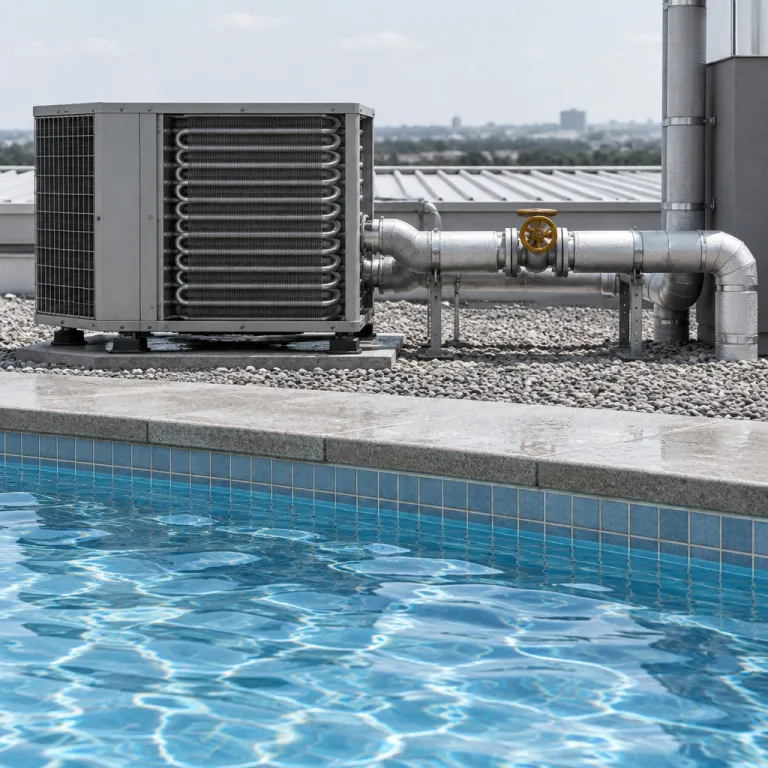
Why rooftop pools are beautiful, energy hungry, and rarely explained
The rooftop pool is the luxury hotel’s halo, yet also its hungriest source of energy. When a swimming pool is lifted twenty floors into the wind, every square metre of warm pool water becomes a tiny power station, quietly driving up energy costs and emissions. For families choosing a skyline stay, understanding rooftop pool energy cost sustainability is now as essential as checking the view.
At altitude, exposed surfaces lose heat faster through convection and evaporation, so rooftop pool heating demands more electric power or more fuel than a sheltered ground level swimming pool of the same size. Engineers measure this heat loss in watts per square metre, and guidance from ASHRAE’s HVAC Applications Handbook shows that a windy rooftop can roughly double the heat needed to keep pool water at a comfortable 27 °C compared with a sheltered deck. That extra heat must come from somewhere, whether a high efficiency heat pump, a natural gas boiler, or rooftop solar collectors feeding a thermal system.
Every part of the rooftop pool system consumes energy, from the filtration pump to the water heating loop and the control electronics that manage temperature and flow. Hotels that take rooftop pool energy cost sustainability seriously now commission at least one independent case study or internal audit to map real energy consumption hour by hour. Those data sets, similar to profiles published by the International Energy Agency (IEA) for commercial buildings, reveal that pool heating and circulation can rival guestroom air conditioning for total energy costs, especially when pool heaters run late into the night to protect a perfect sunrise swim.
The physics of heat loss at altitude and what it means for families
Heat behaves differently twenty floors up, and that shapes both your swim and the hotel’s energy bill. A rooftop pool surrounded by glass wind screens will lose less heat than an infinity edge basin fully exposed to crosswinds, so the required pool heating energy can vary dramatically between similar looking rooftops. For a family comparing properties, rooftop pool energy cost sustainability is partly hidden in these design choices that never appear on the booking page.
To see how this plays out, consider a modest 20 m by 5 m rooftop pool kept at 27 °C in a city where the night air averages 20 °C. Using evaporation and convection rates from ASHRAE’s swimming pool heat loss tables, a sheltered ground level pool might lose around 300–400 W/m² under light wind, while the same water surface on an exposed rooftop can exceed 600 W/m². Over a 10 hour evening period, that difference can add up to more than 100 kWh of extra heat input, which the hotel must supply through fuel or electricity every day the pool operates.
Engineers talk about the coefficient of performance, or COP, when they assess a heat pump that warms pool water using ambient air or waste heat from chillers. A high COP means more heat delivered per unit of electric energy consumed, which translates into reduced energy costs and lower emissions for the same comfortable swimming pool temperature. For example, an air source pool heat pump with a COP of 4 can deliver about 400 kWh of heat using 100 kWh of electricity, whereas a conventional electric resistance heater would need the full 400 kWh of electric input for the same result. When a hotel pairs a high COP heat pump with rooftop solar thermal panels, the combined system can cut fuel use for water heating by more than half compared with a conventional natural gas boiler running alone.
Regulation is starting to catch up with these physics driven realities, especially in regions where new green rules demand better energy efficiency reporting for swimming pools and spas. Readers interested in how future standards may reshape rooftop pool system design can look at the policy analysis on European rooftop hotel sustainability rules. As certification frameworks mature, expect more hotels to publish energy consumption figures for rooftop pool heating, filtration pumps, and even optional solar pool upgrades, giving households clearer signals about which properties align with their sustainability expectations.
Where the kilowatt hours go: breaking down rooftop pool energy use
Behind every serene rooftop pool photograph lies a complex web of pumps, heaters, and control valves quietly consuming energy. The largest share usually goes to water heating, because maintaining a stable temperature in a windy environment requires constant input of heat to offset evaporation and convection losses. Filtration pumps, lighting, and chemical dosing systems add further electric loads, turning the rooftop into a compact but intensive energy consumption hub.
In a typical luxury property, engineers estimate that rooftop pool heating can account for more than half of total pool related energy costs, especially when the pool operates from sunrise to late evening. Variable speed pumps can reduce electric energy use for circulation by matching flow to actual bather load, yet many older systems still run at a fixed speed that wastes power during quiet hours. A well documented case study, such as those highlighted by the World Travel & Tourism Council (WTTC) in its hotel energy efficiency reports, will often show that simply optimizing pump schedules and installing a modern control system can deliver double digit energy savings without changing the guest experience.
Families rarely see these technical decisions, but they feel the results in room rates and in the property’s carbon narrative. Hotels that invest in rooftop solar collectors, high efficiency pool heaters, and insulated pipework can legitimately claim reduced energy cost per cubic metre of pool water, while those that rely solely on natural gas boilers face rising fuel costs and scrutiny. For a deeper look at how water and energy systems intersect above the city, the analysis on rooftop water management systems shows how forward thinking properties now treat every rooftop surface as both a leisure space and an infrastructure asset.
From rooftop solar to pool covers: what serious sustainability looks like
Some rooftops now operate more like small power plants than passive leisure decks, using renewable energy to offset the demands of a heated swimming pool. Solar collectors mounted beside the pool can preheat pool water before it reaches a high efficiency heat pump, reducing the electric energy required to reach the target temperature. When this rooftop solar thermal system is paired with a smart control platform, hotels can time water heating to coincide with peak solar gain and off peak electricity tariffs.
Pool covers are another quiet but powerful tool in rooftop pool energy cost sustainability, especially for family friendly hotels that close the deck overnight. A well fitted thermal cover can dramatically reduce evaporation, which is the single largest source of heat loss from swimming pools exposed to wind, and that means less fuel or electric power is needed from pool heaters the following morning. In practice, this can translate into measurable energy savings that show up clearly in any serious peer review or internal study of rooftop pool energy costs.
Design also matters more than many guests realise, because a smaller, deeper rooftop pool retains heat better than a large, shallow basin with a huge surface area. By limiting exposed surface, architects can reduce both heat loss and chemical consumption, while still offering a compelling view and generous swimming area for households travelling with children. Hotels that communicate these design choices transparently, and that align them with broader sustainability narratives such as those explored in industry wide rooftop sustainability reflections, tend to build more trust with guests who care about both skyline drama and environmental impact.
How to read between the lines when booking a rooftop pool hotel
For families scrolling through rooftop hotel options, the challenge is separating genuine rooftop pool energy cost sustainability from polished marketing language. A property that runs a heated infinity swimming pool for sixteen hours a day, with no mention of renewable energy or energy efficiency measures, is shifting a significant carbon cost into the background of your holiday photos. By contrast, hotels that publish data on energy consumption, explain their heat pump and solar pool systems, and outline seasonal operating schedules are signalling a more honest approach.
When you read a hotel’s sustainability page, look for specific references to rooftop solar thermal systems, high COP heat pumps, variable speed pumps, and pool covers that reduce overnight heat loss. Vague claims about green energy or reduced costs without numbers, a doi reference, or at least one independent case study should raise questions, especially when the rooftop pool is heavily promoted as a signature amenity. Serious properties will often mention the share of total energy costs attributed to swimming pools and spas, and may describe how they shifted from natural gas boilers to renewable energy sources to achieve measurable energy savings.
Families can also ask direct questions before booking, such as whether the rooftop pool uses a solar pool preheating loop, how long the pool heaters operate each day, and whether the system is monitored for energy efficiency. Hotels that respond with clear explanations of their water heating strategy, their choice of fuel, and their plans to further reduce energy cost are usually the ones treating sustainability as more than a marketing line. Over time, as more peer review and industry study work shines light on rooftop pool energy costs, guests will have stronger tools to align their skyline stays with their environmental values.
FAQ
Does a rooftop pool always use more energy than a ground level pool ?
A rooftop pool usually requires more energy because wind and exposure increase heat loss from the water surface. When the pool is located at altitude, evaporation and convection remove heat faster than at ground level, so the heating system must work harder. Good wind protection, pool covers, and efficient heat pumps can narrow this gap, but rarely eliminate it entirely.
What should I look for in a hotel that claims a sustainable rooftop pool ?
Look for specific details about rooftop solar thermal panels, high efficiency heat pumps, and variable speed pumps rather than generic green statements. Hotels serious about rooftop pool energy cost sustainability often publish data on energy consumption or describe a case study of their upgrades. Clear explanations of pool heating schedules, use of pool covers, and any switch away from natural gas to renewable energy are strong positive signs.
Are solar pool systems effective on hotel rooftops in cloudy climates ?
Solar thermal systems for pool water can still provide useful preheating in cloudy regions, though the share of total heat they supply will be lower than in sunny destinations. On a rooftop, even diffuse light can contribute to water heating when collectors are correctly oriented and sized. Hotels often combine solar collectors with a high COP heat pump so that renewable energy covers part of the load and electric backup handles the rest.
Do pool covers really make a difference on windy rooftops ?
Yes, pool covers are one of the most effective tools for reducing energy consumption in exposed rooftop pools. By limiting evaporation, they cut the largest single source of heat loss from swimming pools, especially overnight when air temperatures drop. This means the heating system needs less electric or fuel input the next day to restore a comfortable temperature for guests.
Can families influence hotel decisions about rooftop pool sustainability ?
Guest demand plays a real role, because households that ask about rooftop pool energy efficiency signal that these issues matter when choosing where to stay. When hotels receive repeated questions about heat pumps, rooftop solar, and energy savings, they are more likely to invest in upgrades and to publish clearer information. Over time, this feedback loop can shift the market toward properties that treat rooftop pool energy cost sustainability as a core part of their luxury offering.
References
International Energy Agency (IEA)
World Travel & Tourism Council (WTTC)
American Society of Heating, Refrigerating and Air-Conditioning Engineers (ASHRAE)