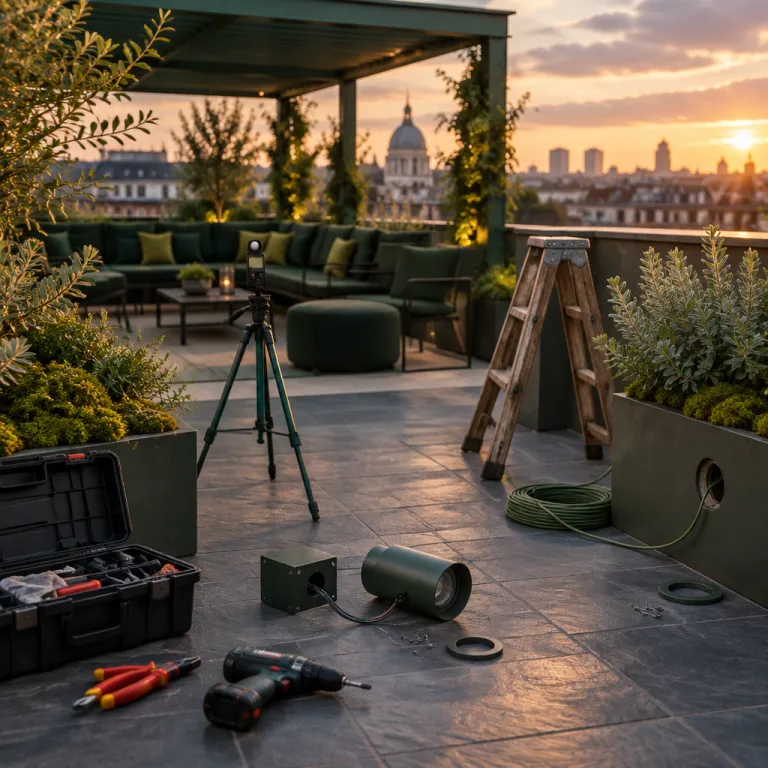
When daylight fades, the rooftop decides who it really is
The moment natural light slips behind the skyline, a rooftop either sharpens into focus or dissolves into glare. On a luxury rooftop terrace, the best lighting design at night feels effortless, yet every beam of light, every shadow and every reflection has been calculated. As a guest choosing a rooftop hotel, you are really choosing how you want the city to feel after dark.
High end hotel lighting on the roof starts with a simple question: what should guests actually see once the sun has gone. Designers study how the rooftop bar, pool deck and rooftop restaurant will look from every seat, then use layered lighting to guide the eye from table to skyline and back again. When this lighting strategy works, the guest experience becomes quietly cinematic rather than theatrically staged.
Look closely at the architectural features around you, because they often double as discreet lighting instruments. Columns, planters and parapet walls hide fixtures that wash surfaces with warm ambient light instead of blasting faces with exposed bulbs. The result is a rooftop space where you notice the city, the people and the plates, not the lights themselves.
The golden hour shift: how rooftops glide from sunset to night
On a well considered rooftop, the transition from golden hour to full restaurant night is almost imperceptible. As the sky cools from amber to deep blue, the rooftop hotel lighting design at night should slowly raise output, warm the colour temperature and tighten beam angles so the city keeps its drama without losing intimacy. You feel the mood deepen, but you never see a switch being flipped.
Design teams program outdoor lighting scenes that track this change in the sky, using control systems to fade up bar lighting, accent lighting on planting and architectural lighting on façades in gentle steps. The best properties treat this like a performance cue: the rooftop bar becomes quieter, the music softens and the hotel exterior starts to glow rather than shout. This is also when a thoughtful general manager checks that light pollution is contained so neighbouring residences see a halo, not a flood.
For travelers comparing skyline pools, this twilight choreography matters as much as water temperature or edge design, a point explored in depth in this analysis of when the edge is not the whole experience. A rooftop that nails this timing will let guests linger through dinner, drinks and late night conversations without ever squinting or reaching for sunglasses. When you are browsing hotel photos, look for sequences that show the same space from sunset to darkness, not just a single hero shot, and imagine a time lapse that reveals how the rooftop lighting evolves.
Colour temperature, layered lighting and the way faces look at 21.00
Most travelers never think about Kelvin values, yet colour temperature quietly shapes every rooftop drink and rooftop restaurant dinner. Warm light in the 2 200 to 2 700 Kelvin range flatters skin tones, makes cocktails glow and gives outdoor spaces a soft, welcoming feel. Cooler whites around 3 000 to 3 500 Kelvin suit pool decks and circulation routes where clarity and safety matter more than romance.
Interior designers and lighting consultants build layered lighting schemes that stack these tones with precision, combining string lights, step lights, recessed downlights and hidden uplights to create depth. Over dining tables, tighter beam angles keep plates bright while leaving the background in a gentle ambient wash, which is crucial for food photography and relaxed conversation. Around pools and water features, slightly cooler architectural lighting helps guests read surfaces and edges clearly, a design logic that echoes the engineering focus discussed in this piece on how pool depth and structure shape a swim.
For you as a guest, the test is simple: sit down, take a photo of a friend and check whether their face looks natural or washed out. If the hotel lighting design at night has been tuned well, eyes will sparkle, shadows will be soft and the skyline behind will read as a backdrop rather than a black hole. When colour temperature, layered lighting and accent lighting align, the guest experience feels quietly edited, as if someone has already framed the evening for you.
Invisible engineering: glare, control and the architecture of shadows
The most sophisticated rooftop lighting after dark is almost impossible to point at. Instead of visible fixtures, you notice a continuous line of light along a bench, a gentle glow under a bar counter or a soft halo around a tree canopy. This is architectural lighting doing its best work, turning structural elements into sources rather than cluttering the view with hardware.
Anti glare thinking starts with where guests actually look: across the table, toward the horizon and down at steps or thresholds. Designers choose beam angles that keep light out of eyes, use louvers and snoots to shield sources and rely on reflected light from walls and floors to create a comfortable ambient level. When you walk through a luxury rooftop and never see a bare bulb, you are experiencing a hospitality team that respects both comfort and long term guest experience.
Control systems sit quietly in the background, but they are the reason a rooftop bar can dim for a proposal, brighten for a private event or shift scenes between dinner and late night service without drama. Good control also limits light pollution by keeping the hotel exterior bright enough for identity yet dark enough for the night sky. As a traveler, you feel this as a sense of calm: shadows are intentional, pathways are legible and the city beyond remains the star performer.
Bars, restaurants and the Instagram test of a rooftop at night
Rooftop bars and rooftop restaurants now design their lighting as carefully as their cocktail lists. The Instagram test is unforgiving: guests will photograph every corner, so bar lighting, table lamps and outdoor lighting must flatter both people and plates. Properties that understand this treat every seat as a potential camera position, not just the front row by the glass.
On the best terraces, string lights are used sparingly as a decorative layer, never as the only source of light for an entire space. Accent lighting picks out bottles on the back bar, architectural features like pergolas or chimneys and the edges of planters, creating sense of depth without overexposing the skyline. If you look at the menu and the food appears rich in colour rather than grey, you are seeing how carefully tuned hotel lighting can elevate restaurant night service.
For travelers who care as much about the plate as the panorama, it is worth reading how chefs adapt menus to altitude, wind and temperature in this piece on how rooftop menus are engineered for the elements. When lighting design, bar operations and kitchen timing align, the rooftop becomes a complete hospitality space rather than just a view platform. You leave with photos that need no filters and memories of a city that seemed to light itself just for your table.
How to read rooftop lighting before you book a stay
Evaluating rooftop hotel lighting design at night from a booking page is not impossible. Start by scanning photos for balance: can you see faces clearly, read the table surface and still make out the skyline, or does one element dominate. If every image looks blown out or murky, expect the real guest experience to feel the same.
Next, look for evidence of layered lighting such as subtle glow along pathways, gentle washes on walls and distinct pools of light over tables or lounge clusters. These cues suggest that interior designers and lighting specialists have shaped the space rather than leaving it to generic outdoor fixtures. You can also check whether the hotel exterior signage and façade lighting appear controlled, which usually signals a broader respect for light pollution and neighbourhood context.
Finally, read guest reviews with an eye for comments about atmosphere, not just view or music. Mentions of warm, intimate spaces, comfortable visibility and a relaxed feel after dark often indicate that lighting decisions have been made with care. When a rooftop hotel treats lighting as part of its core hospitality promise, you will feel it in every quiet, unhurried moment between sunset and the last drink.
FAQ: rooftop lighting after dark for hotel guests
How does rooftop lighting affect my comfort as a guest
Rooftop lighting affects how easily you can see faces, read menus and move safely around the space. Well designed hotel lighting uses warm tones, controlled beam angles and layered lighting to avoid glare while keeping pathways and steps clear. You experience this as relaxed eyes, natural looking photos and a rooftop that feels welcoming rather than harsh.
What should I look for in rooftop photos before booking a hotel
Check whether the rooftop bar and rooftop restaurant images show both people and skyline clearly without overexposure. Look for subtle accent lighting on architectural features, gentle ambient light on tables and limited light spill into the sky. If every shot relies on candles or string lights alone, the real space may feel under lit or impractical.
Why do some rooftops feel too bright or too dark at night
Over lit rooftops usually rely on strong downlights or exposed fixtures that create glare and flatten the atmosphere. Under lit spaces often depend only on decorative lights without enough functional outdoor lighting for circulation and safety. A balanced rooftop hotel lighting design at night combines both, using control systems to adjust levels as the evening evolves.
Is light pollution a concern when choosing a rooftop hotel
Light pollution matters for both neighbourhood comfort and your own night sky experience. Hotels that manage light pollution well use precise architectural lighting on the hotel exterior, shielded fixtures and carefully aimed beam angles to keep light where it is needed. This usually correlates with a more refined guest experience on the rooftop itself.
Do rooftop pools need different lighting from rooftop bars
Rooftop pools require slightly cooler, clearer light for safety and depth perception, while rooftop bars benefit from warmer, softer tones for intimacy. Designers often separate these zones with different lighting scenes, using accent lighting on water features and warmer bar lighting on seating areas. When done well, you can move between swim and drink without feeling a jarring shift in atmosphere.